>> July 2026: Here is the latest edition of our Market Insights
Major economic transformations rarely begin with a dramatic event. More often, they emerge gradually before fundamentally reshaping industries and societies. Much suggests that we are currently experiencing such a transition.
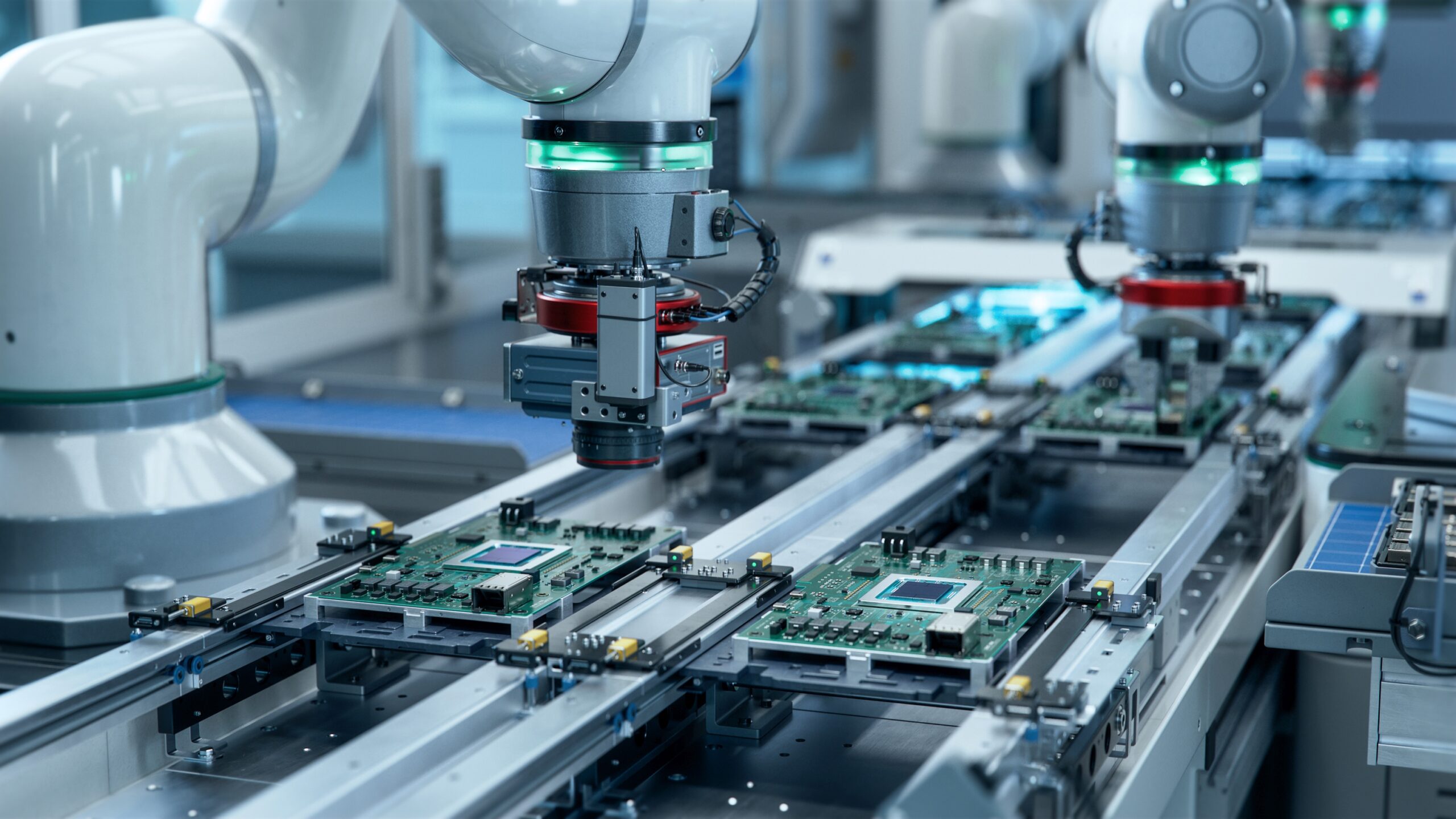
Digital transformation, and artificial intelligence (AI) in particular, has triggered a new phase of industrialisation. AI is often associated with today’s technological leaders: semiconductors, data centres and software platforms. Yet, industrial revolutions are not defined solely by technological innovation, but by the economic transformation they ultimately enable.
History provides a useful perspective. During the Industrial Revolution of the 19th century, engineers and machinery manufacturers initially took a leading role. Their inventions enabled entirely new forms of production. However, the true economic significance only became apparent later, when these technologies were widely adopted across factories and offices, fundamentally reshaping entire value chains.
We are witnessing a similar development today. The engineers of our time are creating large language models, algorithms and digital tools that unlock entirely new opportunities. Businesses must now learn how to integrate these technologies effectively into their processes, products and services. Human expertise will remain essential during this new phase of industrialisation, but the emphasis is shifting from developing the tools to applying them as expert users, decision-makers and innovators.
At the same time, the AI economy is still in its pioneering stage. Around the world, companies are experimenting, investing heavily and testing a wide range of new applications. Few companies today can afford to operate without an AI strategy. Yet the experimentation phase is increasingly giving way to practical validation. The key question is no longer what artificial intelligence might theoretically achieve, but where it can demonstrably increase productivity, reduce costs and unlock new business potential. This shifts the investment focus from the availability of the technology itself to the ability of companies to embed AI into workflows, improve margins and scale their business models.
Switzerland is particularly well positioned to benefit from this trend. With its strong industrial base, leading pharmaceutical companies, highly specialised service providers and world-class research institutions, the country is exceptionally well equipped to translate new technologies into tangible economic value and lasting competitive advantages.
Conclusion: The AI revolution marks the beginning of a new era of industrialisation. After years of development and enthusiasm, the focus is now shifting towards practical implementation and measurable results. The greatest winners over the coming years are therefore unlikely to be only those developing artificial intelligence, but above all rather those applying it most effectively to become more productive, innovative and competitive.
Giorgio Saraco,
Partner, Head Asset Management